
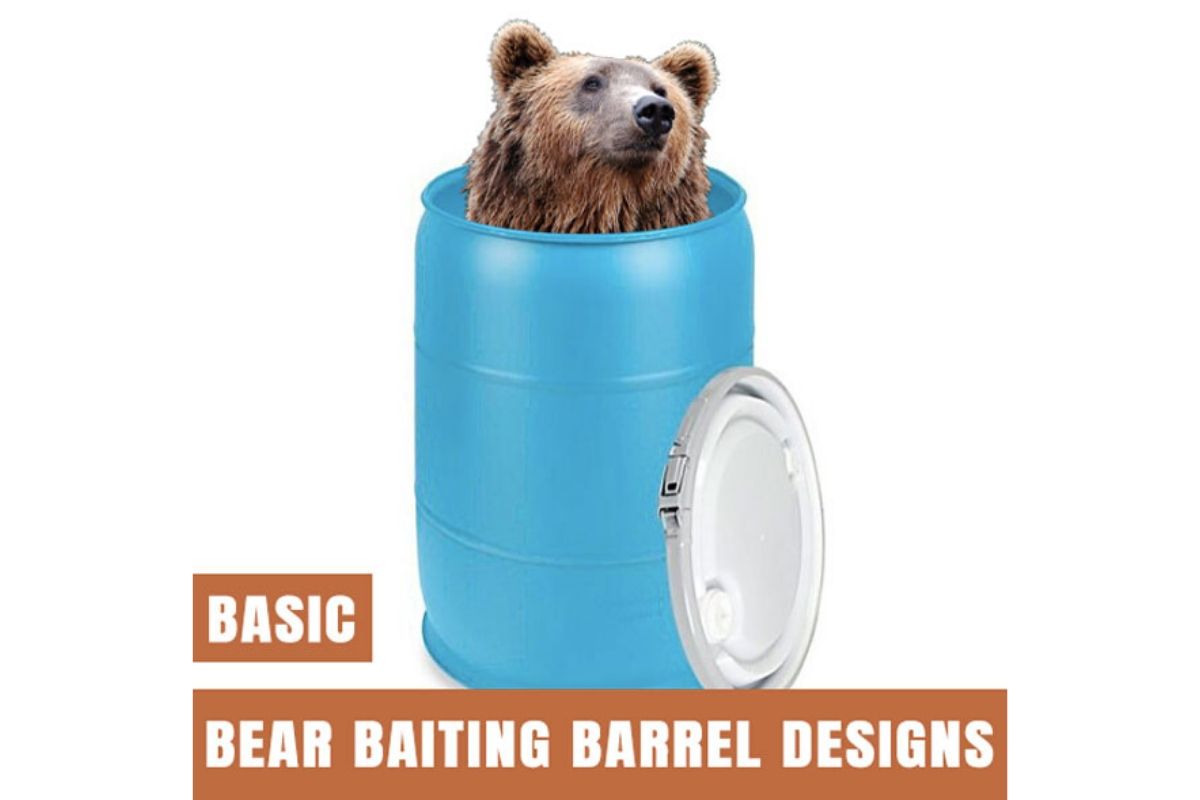
Bear Baiting Barrels are used to slow the flow of bait being served at your bear station, encouraging the bears to return over and over.
The basics of design are fairly common, though there are a number of personal views on the specifics. As with everything, check your local wildlife hunting regulations before setting up a bear baiting station.
Here’s the Bear Baiting Barrels 101:
Metal or Plastic

Though metal 55-gallon drums are more resilient, they also are quite a bit heavier than their plastic counterpart.
Metal drums weigh approximately 40 pounds while plastic drums are half that weight at 20 pounds.
This makes a resounding difference when packing in a barrel, especially if you are having to pack it in any distance at all.
Metal 55-gallon barrels cost about $100 each, while their plastic counterpart runs about $70. Prices vary depending on if you’re having them shipped to you or are buying them locally.
Rings or Screws
The typical barrel comes with a lid that is fastened on top with a spring or some type of clamp. This makes it easy to take the lid on and off when refilling your bait station with bear goodies.
However, knowing the curious nature of bears it may end up simply being a pop-top lid for them. And if this happens, the dam gate is opened and your bait barrel will be quickly drained before you can return to check on it.
An alternative is to run screws through the lid. Though this can be a pain in the backside to deal with, versus simply clamping on the top, it will do a better job of ensuring that your lid will stay in place after a bit of rough-housing by your trophy bear.
Chain or Wire
I don’t see a big difference between the two, other than weight and convenience.
Chain is much heavier to pack-in to your baiting site than wire. One benefit of using chain is being able to adjust the size of chain by running your lock through a different link than the ends. With wire, you could come up with a piece that’s way too long, or worse, too short to go through the barrel and around the tree.
Consider the pluses and minuses before purchasing and hauling up a length of your favorite fastener with you.
Holes (Cutouts)
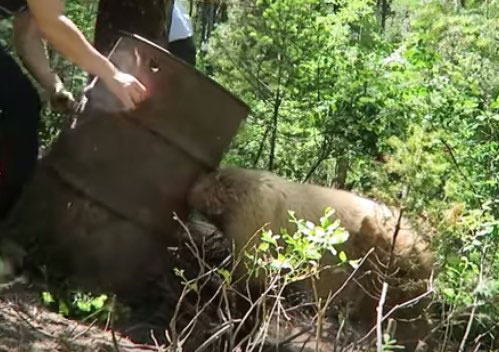
For every hunter that cuts holes in their barrels, there’s a different idea for size and location(s) of the holes. It seems to come down to personal preference, superstition, a little luck, and definitely experience.
One thing we can all agree on is to make sure the slot you cut out is smooth. Make sure there aren’t any jagged cuts or pieces of plastic/metal edges sticking out to catch the bear’s face or paws.
Cut out a hole –– 4″ to 6″–– the idea is to have a hole big enough for the bear’s paw and up to their first joint. This way, they can reach the bait but not get too much of it at a time.
One common tactic is to shove some type of stump or branches in the opening to make the bear work a little harder to get to the bait and so you can see at a distance if your barrel’s been hit by a bear already.
Also, you will need to cut out two holes on the back of the barrel big enough to feed your chain/wire through. Do yourself a favor and run the chain/wire through the hole after making the cut to make sure it fits. Being on the side of the mountain with a chain that won’t fit on through the holes in your barrel is frustrating.
Leave a Reply
You must be logged in to post a comment.